On October 28, 2023, Matthew Perry, the actor who played Chandler Bing on the television series "Friends," was found unresponsive in his hot tub at his Los Angeles home. He was 54 years old. The cause of death, according to the Los Angeles County Medical Examiner, was "acute effects of ketamine."
The toxicology report revealed ketamine levels in Perry's blood comparable to those used during general anesthesia — far higher than what would be administered in therapeutic settings. Perry had been receiving ketamine infusion therapy for depression, but his last known treatment was more than a week before his death.
His death has renewed scrutiny on a drug that occupies a unique space in American medicine: simultaneously a legitimate anesthetic used in emergency rooms, an experimental treatment for depression, and a recreational drug with a growing presence at parties and clubs.
The Medical Origins
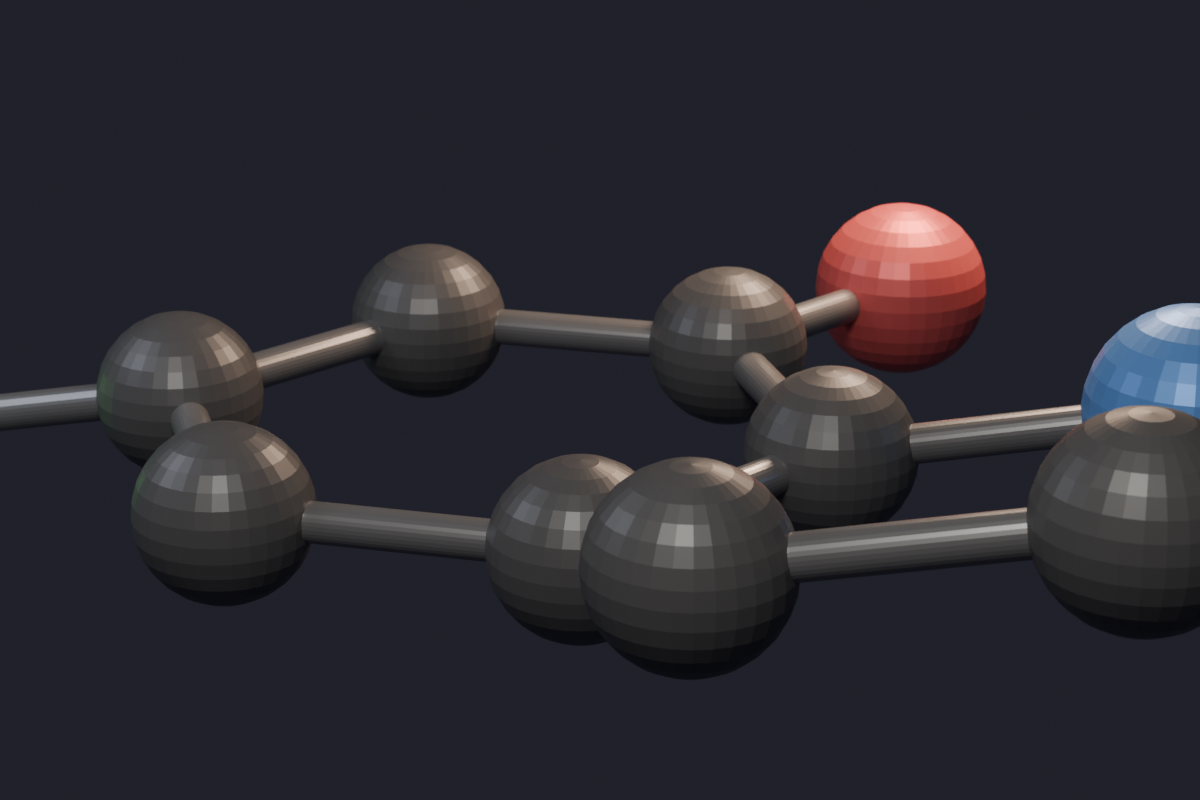
Drag to rotate • Scroll to zoom • The arylcyclohexylamine compound showing the cyclohexanone ring (ketone group in red), attached benzene ring with chlorine atom (green), and methylamino group (nitrogen in blue). Molecular weight: 237.73 g/mol.
The interactive 3D molecule above was created entirely through AI commands using Blender MCP. The system generated accurate molecular geometry (bond lengths, atom positions), applied CPK coloring conventions, and exported to GLB format for web viewing — all without manual 3D modeling.
Ketamine was first synthesized in 1962 by Calvin Stevens at Parke-Davis Laboratories. It was developed as a safer alternative to phencyclidine (PCP), which had severe side effects. The FDA approved it in 1970, and it quickly became the anesthetic of choice in field hospitals during the Vietnam War due to its remarkable safety profile — unlike other anesthetics, it does not suppress breathing or blood pressure.
"Ketamine is one of the safest anesthetics we have. The problem is when it's used outside of medical supervision."
— Anonymous Dr.
For decades, ketamine remained primarily a surgical tool. Then, in the early 2000s, researchers at Yale made a startling discovery: low doses of ketamine could rapidly alleviate symptoms of treatment-resistant depression — often within hours, compared to the weeks required for traditional antidepressants.
The Depression Breakthrough
The mechanism is fundamentally different from conventional antidepressants. While drugs like Prozac target serotonin, ketamine works on the glutamate system, promoting the growth of new neural connections. For patients who have tried multiple medications without relief, ketamine offered something unprecedented: hope.
In 2019, the FDA approved esketamine (Spravato), a nasal spray derived from ketamine, for treatment-resistant depression. Clinics offering ketamine infusion therapy proliferated across the country. Matthew Perry was among those who sought treatment.
"Ketamine therapy saved my life," Perry wrote in his 2022 memoir, "Friends, Lovers and the Big Terrible Thing." He described battling addiction for decades and credited ketamine treatments with helping manage his depression.
The Dark Side
But ketamine's accessibility has grown beyond clinics. Telehealth startups now prescribe ketamine lozenges that patients take at home, with minimal supervision. The drug is relatively easy to obtain illegally, and its reputation as a "safe" substance has made it increasingly popular at parties.
According to data from the CDC's State Unintentional Drug Overdose Reporting System (SUDORS), 912 drug overdose deaths involving ketamine were reported across 45 U.S. jurisdictions between July 2019 and June 2023. The demographic profile of these deaths is revealing:
| Age Group | Deaths | Percentage |
|---|---|---|
| ≤14 years | 3 | 0.3% |
| 15–24 years | 117 | 12.8% |
| 25–34 years | 317 | 34.8% |
| 35–44 years | 223 | 24.5% |
| 45–54 years | 125 | 13.7% |
| 55–64 years | 102 | 11.2% |
| ≥65 years | 25 | 2.7% |
Perhaps most alarming is the polysubstance pattern: 82.4% of ketamine-detected deaths also involved illicitly manufactured fentanyls (IMFs), methamphetamine, or cocaine. The full breakdown of co-occurring drugs paints a picture of dangerous combinations:
| Drug Category | Deaths | Percentage |
|---|---|---|
| IMFs, Methamphetamine, or Cocaine (any) | 751 | 82.4% |
| Illicitly Manufactured Fentanyls (IMFs) | 535 | 58.7% |
| Methamphetamine | 263 | 28.8% |
| Cocaine | 248 | 27.2% |
| Benzodiazepines | 162 | 17.8% |
| Prescription Opioids | 129 | 14.1% |
| Alcohol | 121 | 13.3% |
| Antidepressants | 45 | 4.9% |
Source: CDC MMWR, Vol. 73, No. 44. Data from State Unintentional Drug Overdose Reporting System (SUDORS), 45 U.S. jurisdictions, July 2019–June 2023.
At low doses, ketamine produces euphoria and mild dissociation. At higher doses, it can cause a state known as the "K-hole" — a profound disconnection from reality that users describe as an out-of-body experience. At very high doses, particularly when combined with other substances or when the user is in water, the results can be fatal.
What Went Wrong
The investigation revealed that Perry had been obtaining ketamine from sources outside his legitimate medical treatment. In August 2024, federal prosecutors charged five people — including two doctors — in connection with his death, alleging they supplied Perry with large quantities of ketamine in the weeks before he died.
"These defendants took advantage of Mr. Perry's addiction issues to enrich themselves," said United States Attorney Martin Estrada. "They knew what they were doing was wrong."
The Reckoning
Perry's death has forced a reckoning in the ketamine therapy industry. The American Society of Ketamine Physicians, Psychotherapists, and Practitioners issued new guidelines calling for stricter patient monitoring and limiting take-home prescriptions.
The DEA has increased scrutiny of ketamine prescribing patterns. Several telehealth companies have scaled back their ketamine programs or shut down entirely.
Yet for many patients, ketamine remains a lifeline. Researchers who have studied the drug for decades caution against overreaction — the tragedy of misuse should not overshadow the genuine benefit this medication provides for treatment-resistant depression. The answer, they argue, is better regulation, not prohibition.
Matthew Perry spent decades in the public eye, making millions laugh while privately battling addiction. In his 2022 memoir, he spoke openly about his struggles, expressing hope that he had finally found stability. His death serves as a sobering reminder of how fragile that stability can be.